
Firmus’s IPO Withdrawal Tests the Financing Model Behind AI Factories
Bottom lineFirmus’s move from an ASX float to private funding shifts the test from headline valuation to capital terms, delivery milestones and customer cash receipts. The next round must fund that bridge without assuming flawless execution.

Firmus has withdrawn its application to list on the Australian Securities Exchange and will seek private capital instead. ABC reported the company’s confirmation on October 9: Firmus cited market volatility and said the proposed offer would not adequately reflect its long-term prospects. Reuters also reported the move, including a shareholder letter describing a private-market funding route.
The proposed listing had faced resistance to its pricing. Reuters reported an initial equity valuation of US$30.6 billion, compared with US$10.5 billion after an August funding round. Those were proposed and historical valuations, respectively, rather than evidence that the withdrawn offering raised money. The company has not confirmed the size, valuation or terms of its next private round in the sources reviewed here.
FUVISIGHT’s assessment is that the withdrawal tests how AI factories are financed before their promised output becomes dependable cash flow. One unsuccessful offering does not establish that AI demand has collapsed. It does show that a company can have a credible computing opportunity while struggling to secure capital at the valuation and risk allocation it wants.
A capacity contract is not cash in the bank
In its September 8 announcement, Firmus said its customer commitments exceeded 900 megawatts and described two operating sites and five under development. The company also announced a multi-year OpenAI partnership covering two Malaysian sites. These are company-reported commercial and development milestones. Contracted capacity should not be read as capacity already commissioned, used or paid for.
For investors, the useful question is how a contract becomes a receipt. A project must obtain power, install computing and cooling equipment, pass acceptance tests and deliver the agreed service. The timing and enforceability of customer payments matter as much as the headline size of a commitment. Minimum payments, deposits, termination rights and performance obligations can change who absorbs a delay.
Construction spending and customer receipts can arrive on different schedules. Hardware orders may require cash before a site is ready, while billing may depend on accepted service. Borrowing can cover part of that interval, but it adds interest, maturity and covenant obligations. A longer commissioning period can therefore reduce the financing cushion even when the customer still wants the capacity.
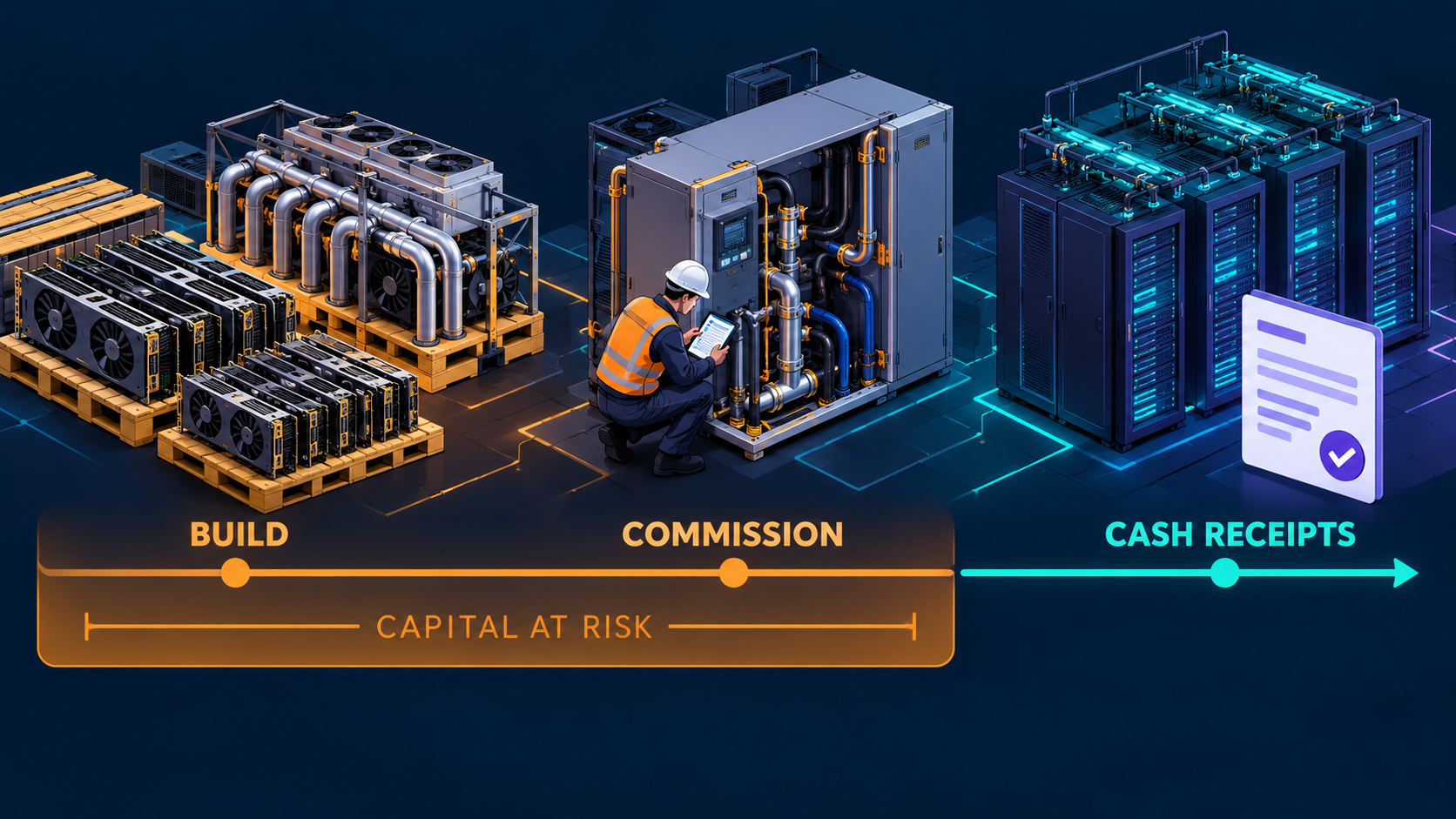
The evaluation should separate existing liabilities from financing that might be needed to complete a proposed buildout. Future capital requirements are not automatically today’s outstanding debt. A clear sources-and-uses schedule would show committed equity, drawn and undrawn debt, equipment payments, construction contingencies and the cash needed before customers begin paying.
Private capital changes the negotiation
Moving to private markets may offer Firmus more time and a smaller group of counterparties willing to assess individual projects. It could also allow financing to be staged against delivery milestones. That flexibility is valuable if it funds work that unlocks customer revenue, rather than merely postponing the next funding decision.
Private money still has a price. Investors can seek preferred returns, stronger governance rights, collateral, conversion rights or protections against dilution. An apparently unchanged valuation may conceal a different economic bargain. The relevant comparison is the net capital available for delivery and the obligations attached to it, not just the headline valuation announced after a round.
The cost of capital connects the financing decision to the operating business. Required investor returns and debt service must be supported by useful computing output after power, maintenance and other costs. More expensive funding leaves less room for slower utilisation, higher construction costs or weaker pricing. Private ownership does not remove those constraints.
A phased build can limit the amount exposed before performance is demonstrated, although it can also slow expansion or forgo purchasing economies. The business case should explain why the next tranche of construction improves returns and what evidence unlocks the following tranche. A large pipeline has less financing value if its stages cannot stand on their own.

The next round needs a delivery test
Three disclosures would help distinguish a workable financing reset from a temporary reprieve: the amount actually committed and available, the economic terms of that capital, and the specific delivery milestones it funds. A financing announcement alone cannot answer all three. Investors also need to know whether proceeds support new capacity, existing obligations or liquidity for current shareholders.
The operating evidence should then follow the same projects over time: ready-for-service dates, customer acceptance, utilised capacity, cash collected and remaining construction commitments. Reporting these together would reveal whether contracted demand is becoming a business that can support its capital structure. Aggregate capacity targets can obscure slippage at the sites that need cash soonest.
The broader lesson is a financing discipline, rather than a verdict on every AI company. Demand, engineering capability and funding availability are separate tests. Firmus’s next private round will be meaningful if its scale and terms buy a credible route to delivered service and receipts. The withdrawal leaves that test open; it does not resolve it in either direction.